On this page
The environment described at launchThe first web-store releaseThe desktop clientPackaging and distribution worked togetherThe three core maintainers thanked in the announcementRead the launch without mixing generationsOriginal publication: 2024-10-11. English edition and practical reading notes: Linglong editorial, 18 October 2026. Chinese original.
On 11 October 2024, the Linyaps community announced the official launch of its application store at store.linyaps.org.cn. Community volunteers had built it from an early prototype into a graphical way to discover, install and manage Linyaps software.
The environment described at launch
The announcement listed deepin 23, UOS V20, openEuler 24.03, Ubuntu 24.04, Debian 12 and openKylin 2.0 as distributions with Linyaps adaptations. Users first needed the Linyaps runtime environment. The store supplied a common discovery and management interface; a browser alone did not provide the local runtime.
Linyaps Simple Store SIG maintained the web store and desktop client. The architecture described in this release used Vue 3 for the browser frontend, Electron with Vue 3 for the desktop frontend, and Java for the server. These are the 2024 components, not the implementation of every later release.
The first web-store release
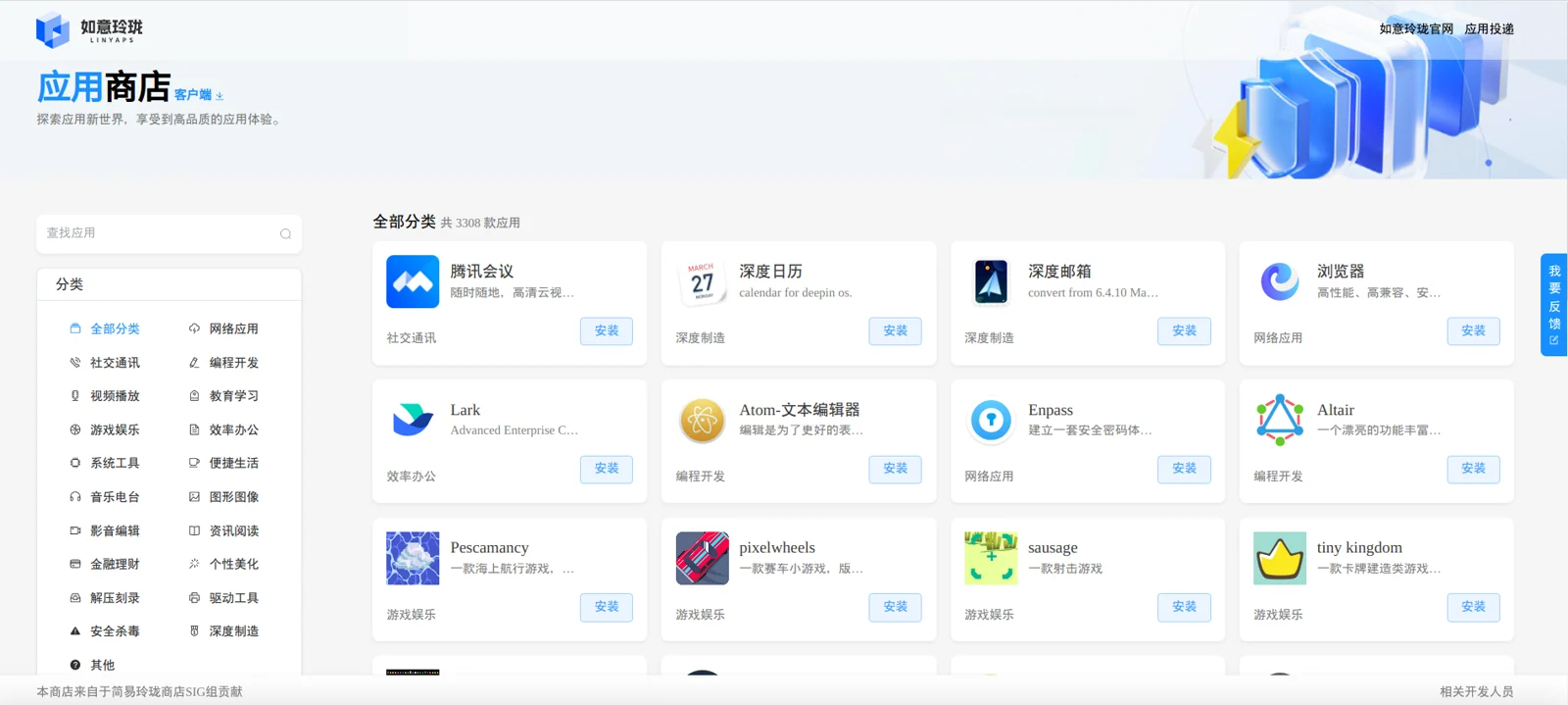
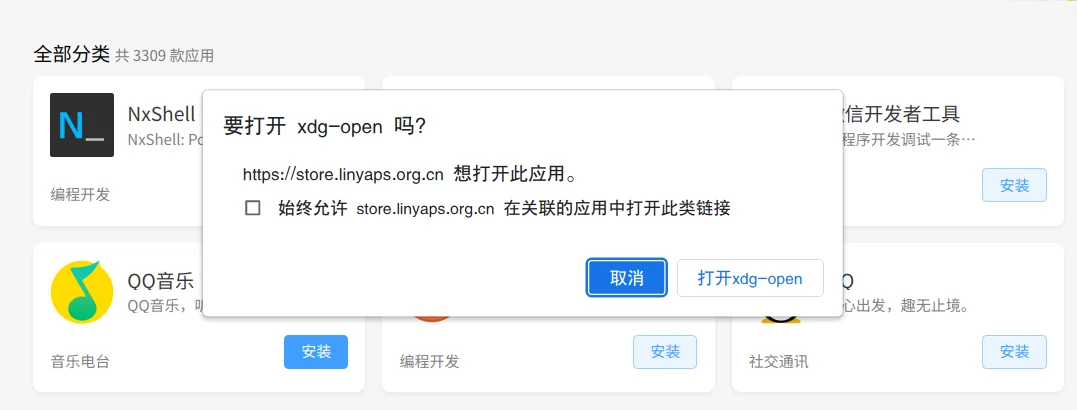
Version 1.0 offered category browsing, application search, installation and problem feedback. The announcement’s installation instructions said that clicking Install opened the Linyaps installation process, which ran the installation command. A completed installation then appeared in the desktop launcher. This depended on the local handler and environment; the restored catalog on this website does not execute an installation.
The desktop client
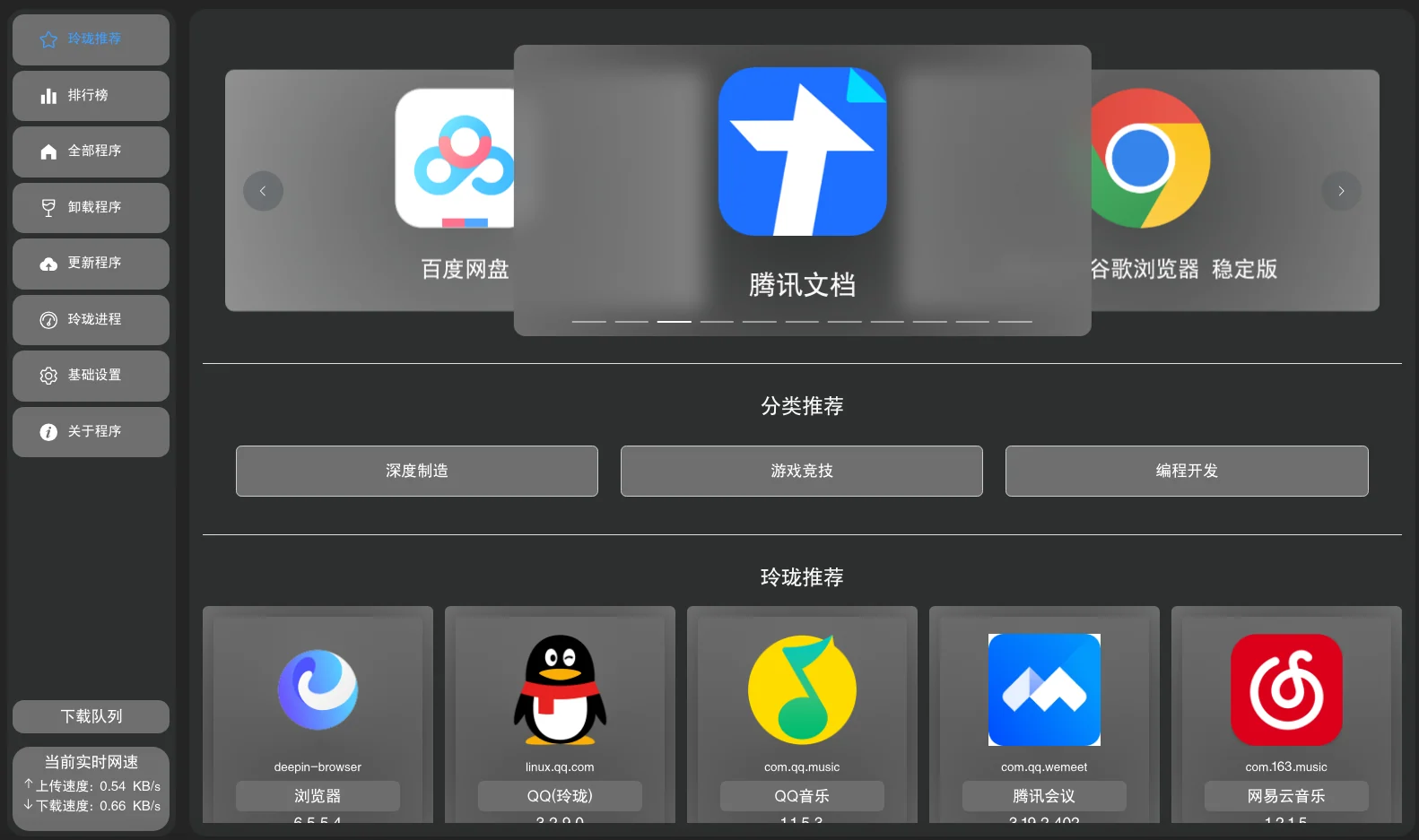
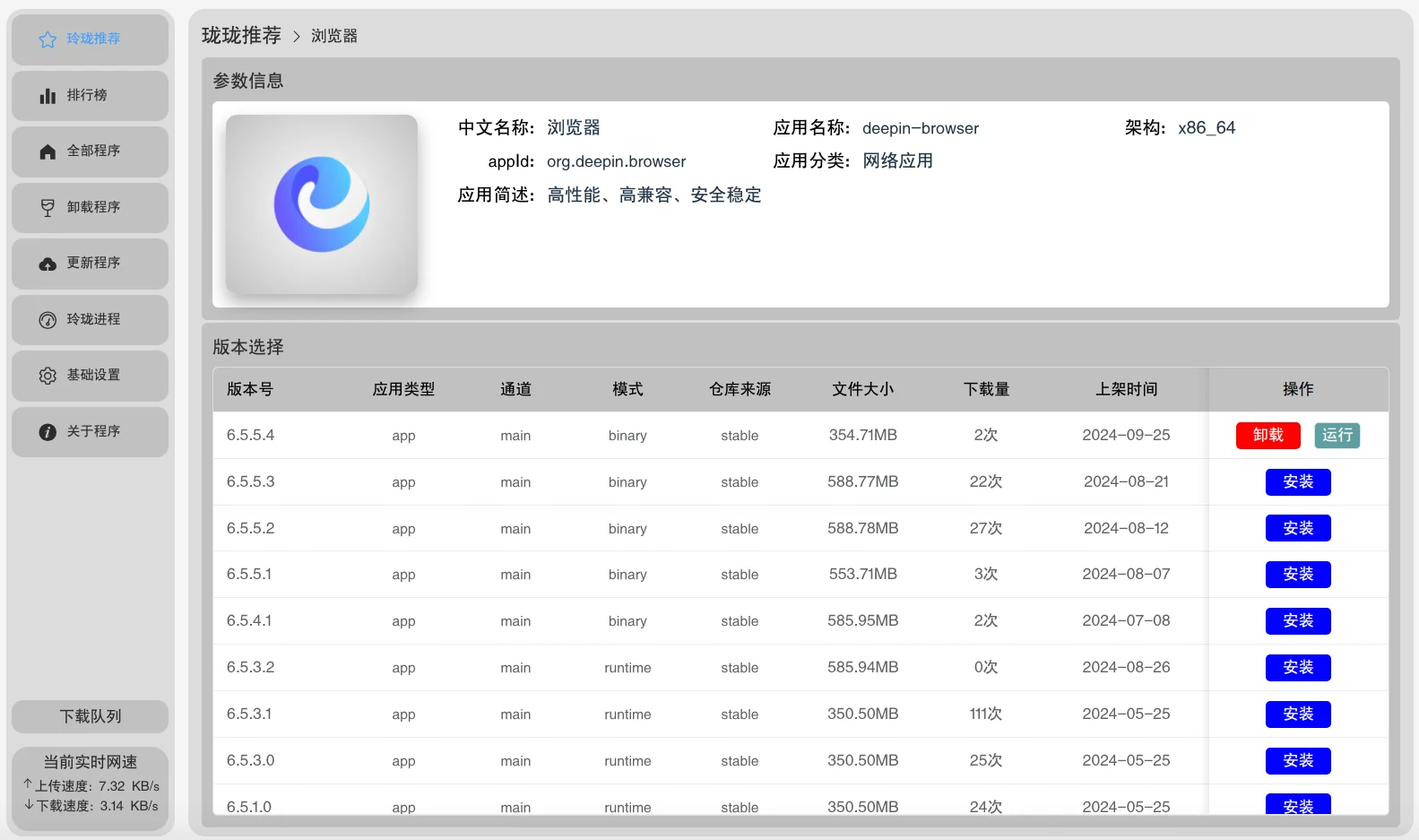
Jokul, the SIG’s initiator, developed the desktop client and updated it almost daily during its early stage. The announcement described recommendations, rankings, category search, install, uninstall, updates and management of running Linyaps processes. The UI could follow the system’s light or dark theme. The desktop release at that time was x86-only.
The original download route was the “Client ↓” button at the top left of the web store, followed by installing its DEB package. When the runtime was absent, a prompt directed the user to environment configuration instructions. Use the current release selector for a present-day installer rather than treating this historical DEB route as universal.

Packaging and distribution worked together
The announcement also introduced the Linyaps Packaging SIG’s one-stop build platform. Developers could contribute application packaging work, with the store providing a cross-distribution delivery route. It linked to github.com/linglongdev.
The three core maintainers thanked in the announcement
- Jokul — project initiator: a developer driven by interest in turning complex command-line work into a usable graphical interface. He handled backend engineering and coordinated the architecture. His introduction emphasized continued learning and improving an initially simple prototype.
- Gyro — UI designer: a designer interested in domestic operating systems who wanted to contribute to their application ecosystem and develop his own design practice.
- Yoloke — web frontend developer: a frontend developer focused on design and translating ideas into a good user experience, while exploring better design skills and new solutions.
The SIG invited developers interested in application stores and ecosystem development to contribute through its project repository. Its stated goal was easier access to Linyaps applications across environments and architectures.
Read the launch without mixing generations
- For the 2024 interface, use the original screenshots above and keep its x86 limitation with that release.
- For a present-day download, open the store release selector and match CPU and format; the obtained 3.7.0 release is a later, separate record.
- Before installing an application, check its exact ID and local runtime. A catalog record, a downloaded store and a running application are three different results.
Choose a release file · Trace the browser-to-desktop handoff
