On this page
1. Find out what is already installed2. Choose a repository policy deliberately3. Search, then use the exact application ID4. Verify the outcomeA complete handover note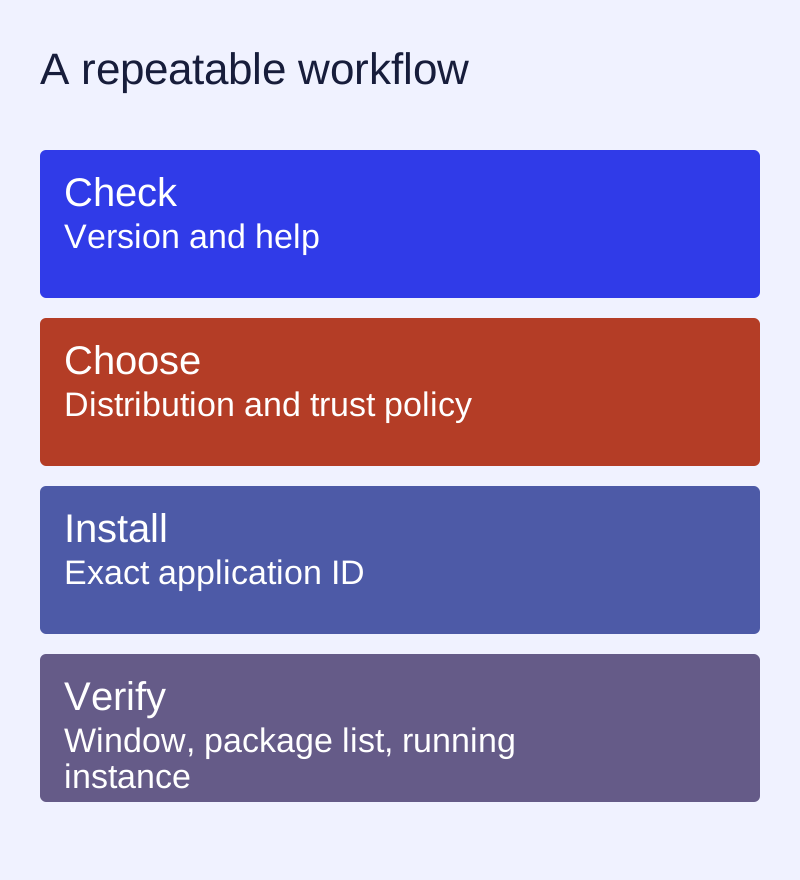
1. Find out what is already installed
Open your Linux terminal and run ll-cli --version. Keep the exact version. The command reference in this edition follows the 1.14.x documentation; a machine running 1.5 or 1.6 may expose different options. If the shell cannot find the command, choose the instructions for your distribution on the installation page.
ll-cli --version
ll-cli --help
2. Choose a repository policy deliberately
The project installation guide distinguishes its release repository from its latest development repository. Start with the release instructions unless you are deliberately testing unreleased changes. The documented APT/DNF recipes currently use HTTPS without package-signing metadata: trusted=yes and gpgcheck=0 are trust decisions, not cosmetic flags. Read the installation page before copying a recipe. Distribution-native packages may follow a different policy.
3. Search, then use the exact application ID
For the documented calculator example, search first. A display name is not the application ID. Inspect the result, repository and version before installing.
ll-cli search calculator
ll-cli install org.deepin.calculator
ll-cli run org.deepin.calculator
This example is copied from the project workflow. Availability and the version returned by a repository can change; a search result on your own machine is the relevant evidence.
4. Verify the outcome
Check that the expected application window opens. Use ll-cli list to inspect installed applications and ll-cli ps to inspect running instances. If installation succeeds but launching fails, collect the exact command and error before changing dependencies. Follow the troubleshooting guide.
A complete handover note
Distribution and release:
CPU architecture:
ll-cli version:
Repository selected:
Application ID and version:
Command entered:
Expected result:
Actual result / exact error:
Remove personal paths, account identifiers and access tokens before posting logs. Installation, launch and desktop integration are separate checks; one does not prove the other two.