On this page
The invitation’s themeA companion copy adds the venue contextPrepare one useful booth questionPresentation materials in the event archiveAfter the event: photographs and the talkThree published schedules, three time slotsReading the 28-page UOS AI presentationA practical example: review three file renamesOriginal publication: 2025-12-05. English edition and practical reading notes: Linglong, 18 October 2026. Chinese original.
The Linyaps invitation was published on 5 December 2025 for COSCon on 6–7 December 2025 at the Park Plaza Beijing Science Park hotel in Haidian, Beijing. This event has ended; the invitation and map are historical records.
The invitation’s theme
The article traced COSCon to an initiative by KAIYUANSHE in 2015, with the name adopted in 2016. For its tenth-year milestone, the 2025 theme was “Open Source, Open Intelligence”, focusing on AI and open-source collaboration. It described a main forum and 24 concurrent activities or thematic forums.
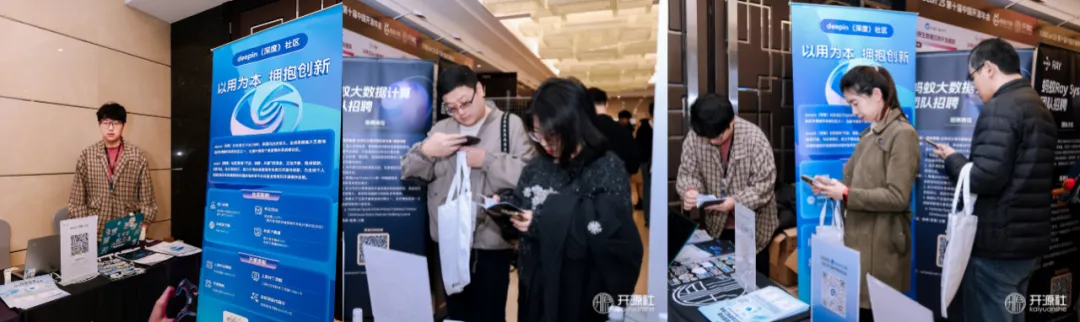
Linyaps was to appear with deepin in the open-source bazaar. The invitation described community check-in activities, open-source quizzes and opportunities to receive community merchandise. Its registration invitation and QR material belonged to that event, not an offer of current tickets or gifts.
A companion copy adds the venue context
The deepin invitation for the same event preserves a venue map and a forum program. The map’s exhibitor list identifies deepin at number 19. The program is dated 6 December and lists the UOS AI talk from 16:00 to 16:20. These are announced coordinates and times, not proof of attendance or a current visit plan.

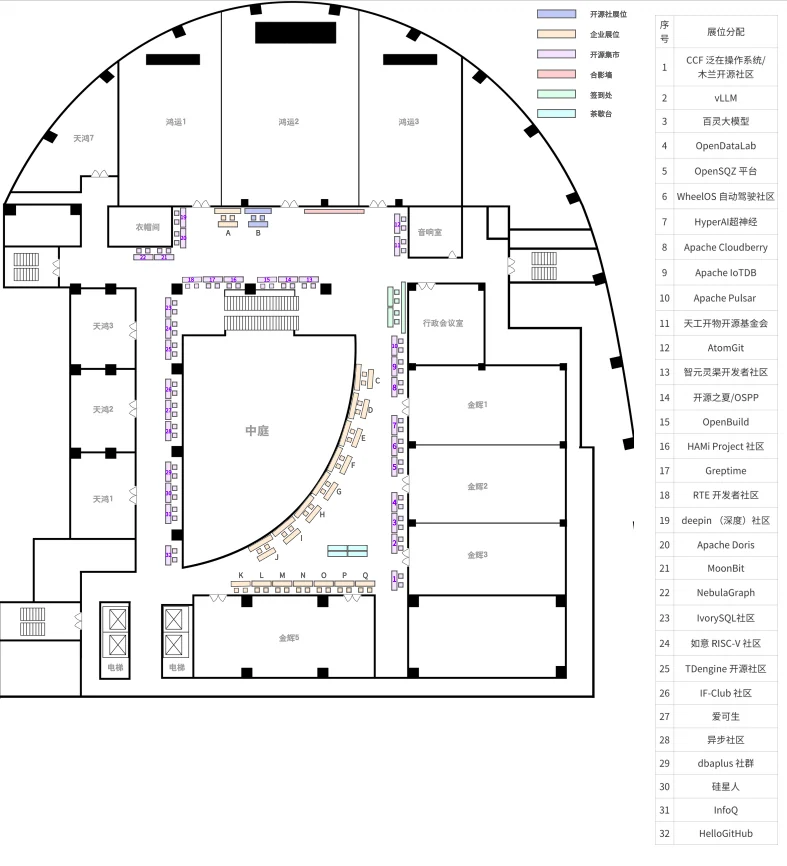
Prepare one useful booth question
Use a project booth to resolve a concrete uncertainty. For a packaging project, bring the application ID, target distribution and the first failing step. Ask which maintained example or issue tracker matches that case, and record the answer’s date.
Project and task:
Application / version / target environment:
One reproducible question:
Demonstration requested:
Maintained source or issue URL:
What the demonstration actually showed:
Next step and owner:
A conversation or an exhibition map does not verify product compatibility. Test the specific task separately.

Presentation materials in the event archive
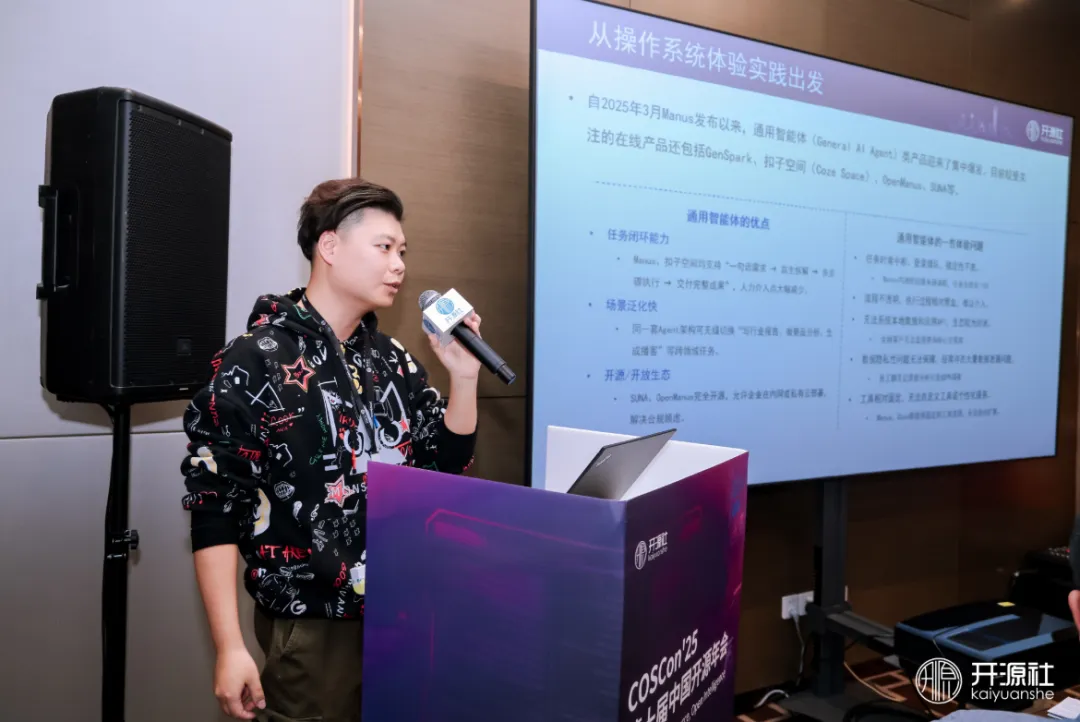
KAIYUANSHE’s COSCon 2025 slide repository lists Zheng Youge’s presentation, How UOS AI shapes a new intelligent operating-system experience. Read it alongside the dated program as a historical presentation source; it is not a current Linyaps application compatibility test.
After the event: photographs and the talk
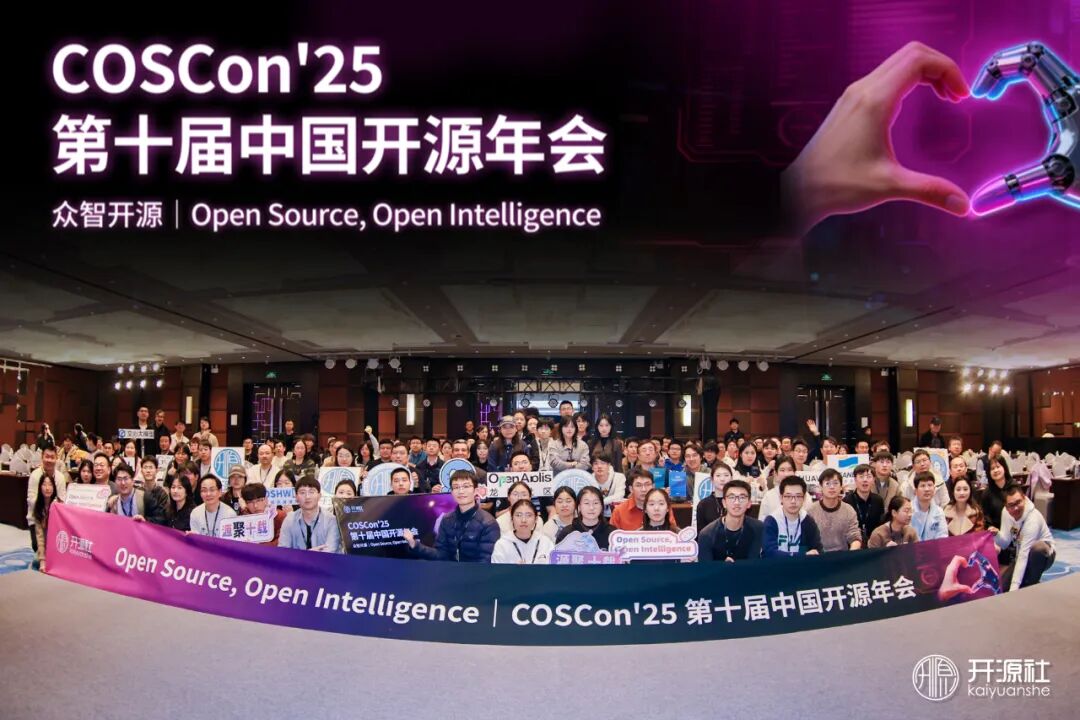
Read the invitation alongside deepin’s report of 10 December 2025 and openKylin’s forum report of 8 December. The former records the community booth and Zheng Youge’s UOS AI presentation. The latter places the presentation in the Open-source Operating Systems and Supply Chain forum on 6 December. The photographs below belong to that historical event.
Three published schedules, three time slots
The preserved sources disagree on the UOS AI session. The event platform associates the talk with Zheng Youge in the operating-system forum. Read the time together with its source; these records do not establish the actual start time on the day.
| Source | Listed time |
|---|---|
| deepin invitation, 3 December 2025 | 16:00–16:20 |
| openKylin program, 3 December 2025 | 17:30–18:00 |
| Bagevent event record | 17:00–17:30 |
A Wayback capture of the Bagevent page from 13 December 2025 already lists 17:00–17:30 for this talk. This supports the date of that published schedule; it still does not verify the actual on-stage timing.
Two QR designs, one event record
The full-size 430×430 QR from the deepin invitation differs from the one in RTE Community’s 3 December announcement, but both decode to https://www.bagevent.com/event/8199016, the record of COSCon’25 organized by KAIYUANSHE. The event took place on 6–7 December 2025. The image is preserved for reading the historical announcement; it does not offer current tickets.
View the original event poster and historical registration image


What the other publication preserves
A 5 December 2025 BAAI republication retains the bazaar announcement and identifies its source as WeChat. Its deepin entry announces a community introduction, demonstrations and small interaction gifts. Those are the announced activities; the existing post-event photographs document the booth separately. The RTE publication describes its own booth as number 18, distinct from deepin’s number 19 on the companion map.
When using these records, keep four things separate: the announcement’s date, the event’s dates, a planned activity and evidence that it actually occurred. A working registration page or an old “registration open” label does not make the 2025 event current.
Compare the original forum program and its historical registration panel

The forum program covers supply-chain vulnerability analysis, malicious package detection, dependency storage, repository evolution, a supply-chain platform, OpenFDE, UOS AI and APM. These are program topics, not capabilities verified for every Linyaps package.
Reading the 28-page UOS AI presentation
The organizer’s archived presentation by Zheng Youge is a separate source from the invitation. Page 8 discusses tool selection, changing third-party services, permissions and structured results; page 9 separates the agent client from its service layer. Pages 22–23 discuss user intervention and four stages: understanding, planning, execution and feedback.
Ask which tool may act, on which files, with what confirmation and observable result. The deck describes an architecture and demonstrations; it does not establish that a particular current Linyaps package implements them. PDF export metadata says 1 January 2026; the conference itself remains dated 6–7 December 2025.
A practical example: review three file renames
This practical exercise can be done manually in a scratch folder without installing an AI tool. Use copies of three disposable text files, not personal documents. Keep the originals elsewhere.

- Scope. Put copies named
agenda.txt,notes.txtandquestions.txtin a scratch folder. Record each file’s size and, if available, SHA256 before changing names. - Plan. Review the complete table below. Stop for a missing input, an existing destination, an empty list or an operation outside the folder. Never silently overwrite a file.
- Confirm. With an assistant, request a preview first and approve only these three changes. Text inside a file is data, not permission for a different task. After an interruption, inspect what changed before resuming.
- Verify. Expect exactly the three destination names, unchanged contents and no changes outside the folder. Compare each size/hash with its own original. A success message alone is insufficient.
- Recover. Keep the original copies and reverse mapping. If the state is unclear, stop and reconcile the file list rather than repeating all operations.
| Original copy | Proposed name | Reverse mapping |
|---|---|---|
| agenda.txt | coscon-01.txt | coscon-01.txt → agenda.txt |
| notes.txt | coscon-02.txt | coscon-02.txt → notes.txt |
| questions.txt | coscon-03.txt | coscon-03.txt → questions.txt |
If coscon-02.txt already exists, the plan fails before execution. Do not delete or replace it to remove the conflict: choose another destination and review the entire mapping again.
A reusable observation record
Folder and three source filenames:
Proposed mapping and collision check:
Before: filename / size / optional SHA256:
Exact operations approved:
After: filename / size / optional SHA256:
Files outside scope checked unchanged:
Unexpected result and next action:
Reverse mapping / preserved originals:
Fill this record from actual observations. The table is a proposed example, not a claim of a tested Linux, UOS AI or Linyaps execution on this website.